

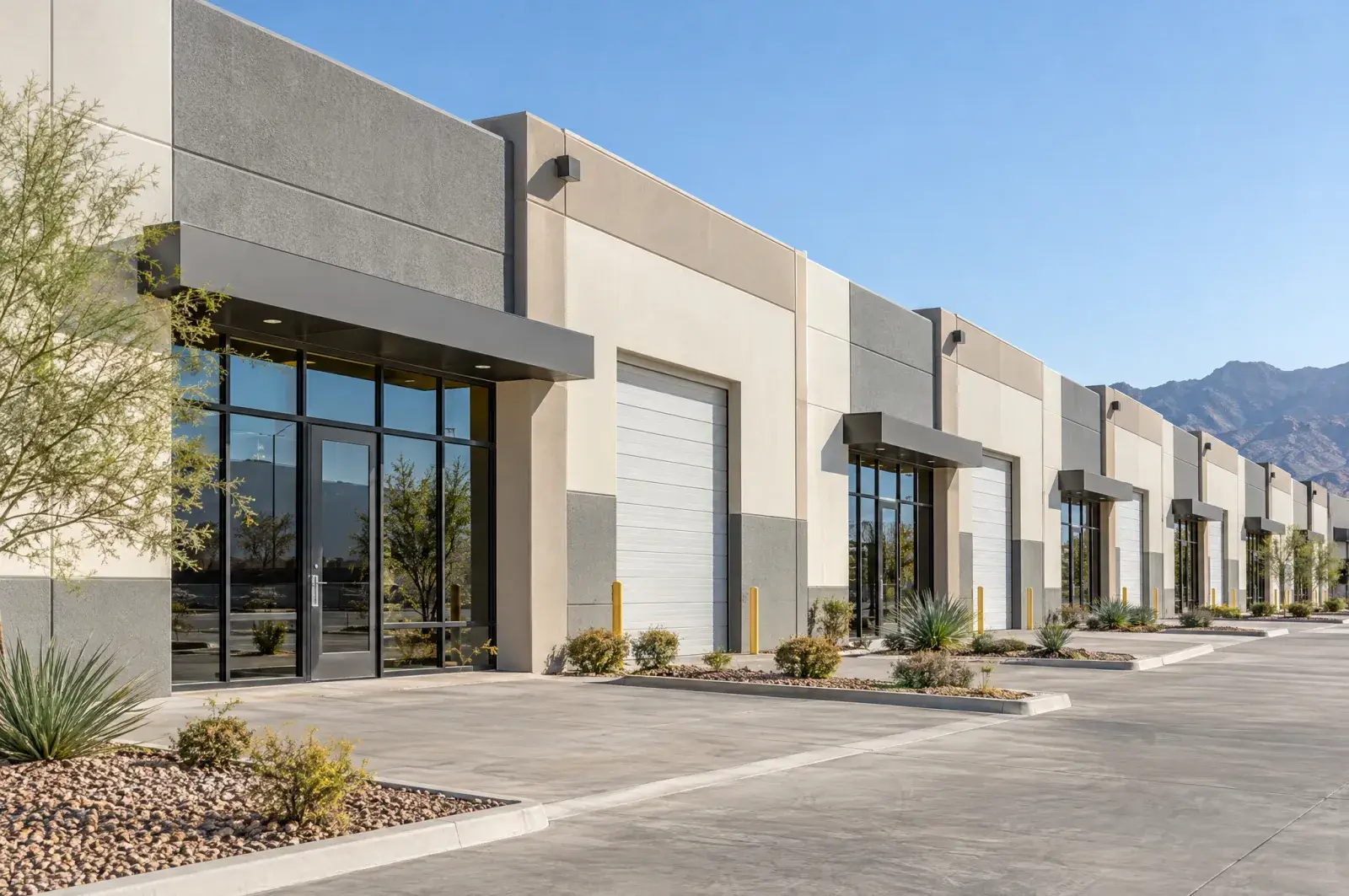

Construction Dust and Debris Removal
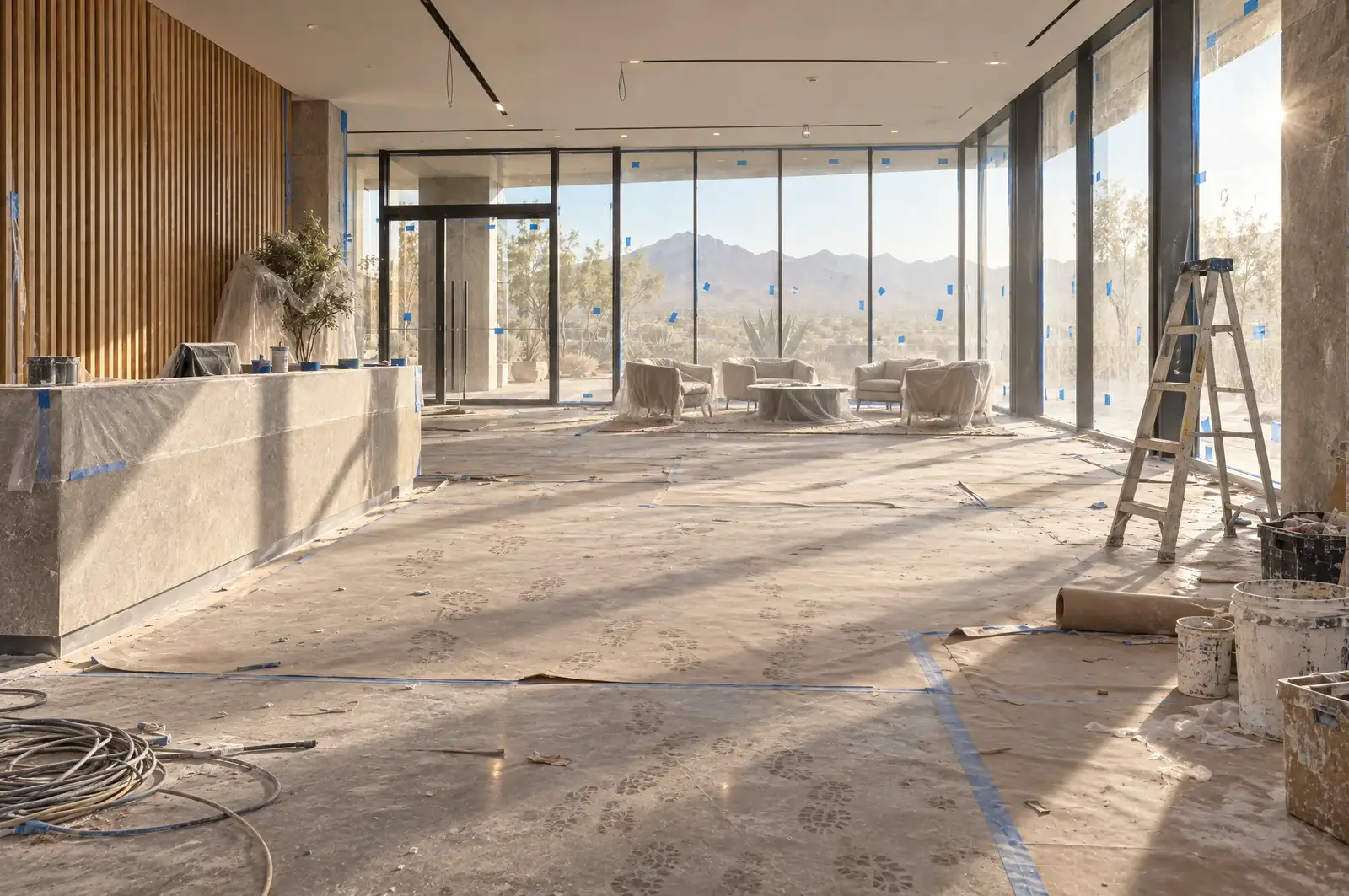
Construction debris removal, for Final Phase, means everything inside the building that the trades leave behind: fine drywall dust, scrap, packaging and small debris. We clear it room by room with HEPA vacuums, working top to bottom, while large dumpster loads stay with your hauler.
| Scope | Dust, scrap, packaging and small debris inside |
|---|---|
| Equipment | HEPA vacuums, brought by Final Phase |
| Method | Top to bottom, back of building to exit |
| Not included | Dumpster loads and bulk haul-off |
What construction debris removal means inside the space
Construction produces two kinds of waste. The first is bulk material: lumber ends, drywall sheets, concrete, packaging pallets and the dumpster loads they fill. The second is fine, loose and everywhere: dust from sanding mud, saw cuts and drilling, plus small scraps and wrapper trash that no one picked up.
Final Phase handles the second kind. Our crews remove dust, scrap, packaging and small debris from inside the building, so the space is ready to be cleaned in detail. Large loads and bulk haul-off belong to your hauler or general contractor, and our visits are timed to their pickups.
This work shows up in every phase of post construction cleaning, but it is the main event in the rough clean, where the amount of dust and debris is highest.
Construction dust cleaning with HEPA vacuums
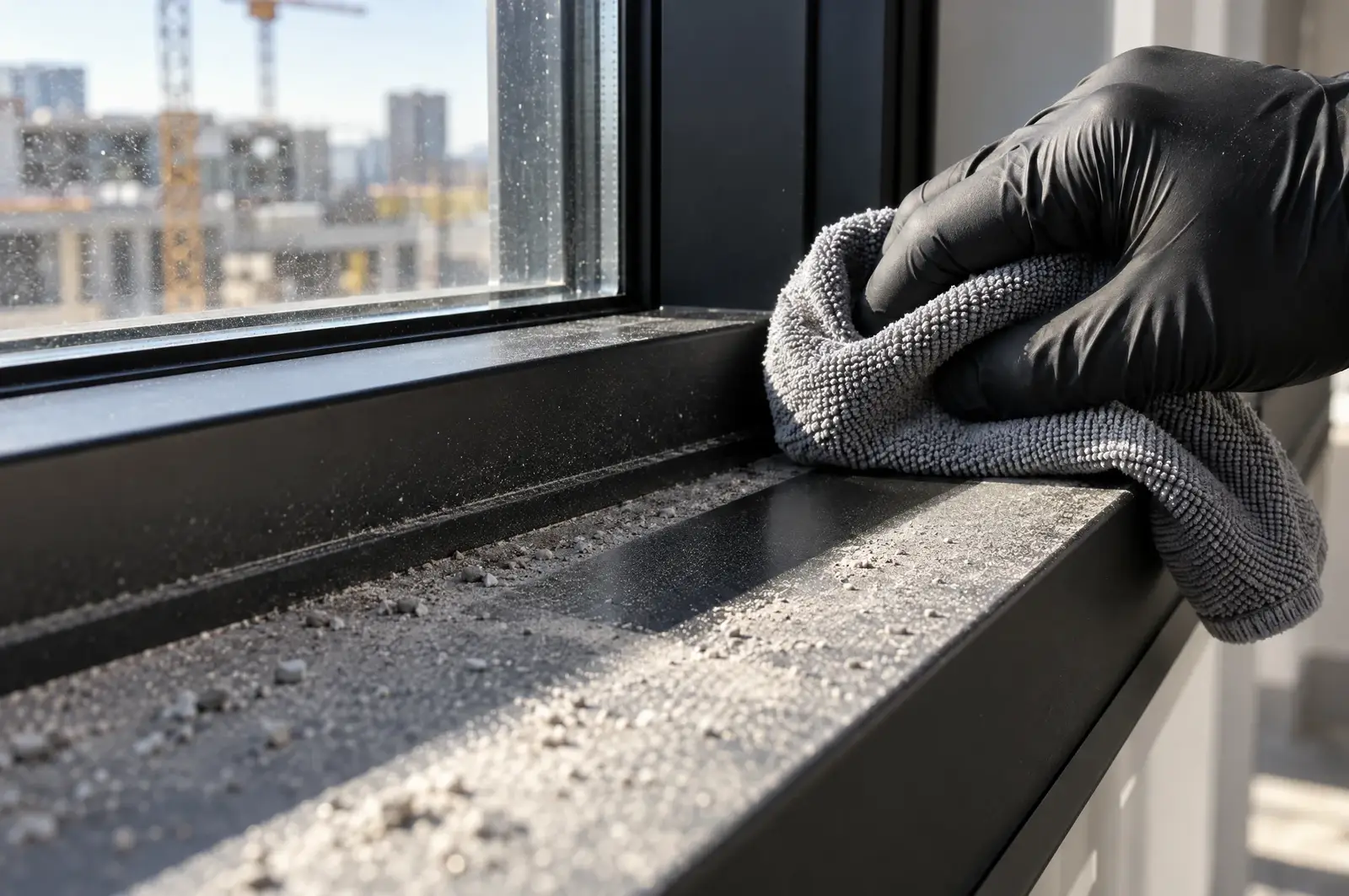
Drywall dust is very fine, and a standard shop vacuum or broom puts a lot of it back in the air. HEPA-filtered vacuums capture the fine particles instead of passing them through, which is why they are the right tool for construction dust cleaning.
The crew vacuums before it wipes, and wipes before it mops. Dry removal comes first because wet dust turns to paste, and paste is harder to remove from a textured wall or a rough slab than loose powder.
Drywall dust cleaning is the largest part of this job on most builds. Mud is sanded smooth between coats, so a single room can produce enough powder to coat every horizontal surface, and the dust drifts into rooms that were never part of the work. Clearing it early keeps it out of finished cabinets, new carpet and the HVAC returns.
- HEPA vacuums for ledges, floors, carpet and vents
- Soft brushes for sills, tracks and door frames
- Damp microfiber after vacuuming, never before
- Filters and bags changed on a job's schedule, not left to fill
Order of operations for dust and debris, top to bottom
The order is the whole technique. Dust falls, so anything cleaned below dust that is still above it will need cleaning twice.
Gather the bulk
Packaging, offcuts, wrap and containers are collected from every room and staged at the agreed point for the hauler.
Ceilings and high ledges
Soffits, beams, light housings, vent covers and the tops of door frames are vacuumed and brushed first.
Walls, sills and frames
Window tracks, sills, baseboards and any horizontal trim are cleared next, moving from one side of the room to the other.
Floors and edges
The floor is vacuumed last, including corners, thresholds and the line where the floor meets the wall.
Check and re-vacuum the route
The crew walks its own path out of the building and cleans the footprints it left.
What Final Phase removes and what stays with the hauler
The line between the two jobs is simple, and agreeing on it up front keeps pickup and cleaning from overlapping.
| Material | Final Phase | Hauler or contractor |
|---|---|---|
| Fine dust | HEPA vacuumed and wiped from every surface in scope | Not applicable |
| Scrap and short ends | Gathered and bagged or stacked inside the space | Hauled off site in the contractor's containers |
| Packaging and wrap | Collected, flattened and staged for pickup | Loaded into the dumpster or truck |
| Large loads and heavy debris | Not handled | Loaded and hauled by the hauler |
Tell us the square footage, the phase and your deadline. We send a clear written bid, usually after a quick walkthrough.
Where dust and small debris hide
Drywall dust removal is mostly about reaching the places people do not look. This is the list our crews work from.
High and hidden
- Tops of door frames, soffits and ceiling beams
- Inside light fixtures and fan housings that are accessible
- Vent grilles, returns and diffusers
- Top edges of installed cabinets and shelving
Openings and tracks
- Window tracks and sills, where sanding dust packs tight
- Sliding door and storefront door tracks
- Hinge edges and door thresholds
- Stair nosings and handrail brackets
Floors and edges
- Perimeter where floor meets wall
- Under toe kicks and around floor registers
- Concrete slab surfaces in utility and storage rooms
- Closet floors and corners
Making debris cleanup part of the schedule
Construction debris cleanup works best when it is planned with the hauler. We ask where scrap will stage, when the next pickup is, and which rooms are cleared first. If the dumpster is full, the cleaning stops at the staging point, which is why scheduling matters.
Dust and debris work sits under every phase, from rough construction cleaning through final construction cleaning. Renovations rely on it even more, because the dust travels into rooms that were not part of the work, as covered under post renovation cleaning. Contractors can see how this fits their site on the general contractors page, or request a bid with the build schedule.
Small debris deserves the same planning. Screws, staples, wire ends and tile spacers are easy to miss and costly to leave behind, because they end up under new flooring, in carpet pile and in the soles of the next crew. The crew sweeps with a magnet and a flat dust pan on slab and subfloor areas before any vacuum passes over them.
Service areas
Construction Dust and Debris Removal across the Las Vegas valley. Pick your city for local details.




Construction Dust and Debris Removal questions
What does construction debris removal include?
Construction debris removal from Final Phase includes fine dust, scrap, packaging and small debris inside the space. Bulk waste and dumpster loads are handled by the hauler or the general contractor.
How does construction debris cleanup work with the contractor's hauler?
We gather and stage scrap and packaging at a point agreed with the contractor, and the hauler takes it from there. Planning the staging point and pickup times ahead of the visit keeps the two jobs from colliding.
What is the best way to remove drywall dust?
The best way to remove drywall dust is to vacuum with a HEPA-filtered vacuum from the top down, then wipe with damp microfiber. Sweeping or wet-wiping first pushes dust into the air or turns it into paste.
Do you do drywall dust removal in occupied spaces?
Yes, as part of renovation work. We clean the work zone and follow the dust through nearby rooms, using HEPA vacuums to keep it from re-entering the air.
Is construction dust a health concern, and do you offer air testing?
We do not test air or offer remediation services. We remove visible dust and debris with HEPA vacuums. Air quality testing and hazardous material work belong to the client's specialty vendors.
Do you remove the dumpster?
No. Dumpsters and bulk haul-off stay with the hauler or the general contractor. We clear the space so the dumpster can be the last stop for the waste.
When in the build should dust and debris be cleared?
The heaviest clearing belongs after drywall sanding and before paint and flooring. A second, lighter pass follows the last trade, so the final clean starts on a surface that is already free of loose material.