

Construction Window Cleaning
Construction window cleaning is the careful removal of everything a build leaves on new glass: manufacturer labels, stickers, tape, protective film, paint overspray, caulk and mud. Final Phase cleans interior and ground-level glass, frames, tracks and sills without scratching the glass or marking the frames.
| Glass | Interior and ground-level |
|---|---|
| Removes | Labels, tape, film, paint, caulk |
| Also cleans | Frames, tracks and sills |
| Not included | Exterior upper-floor glass |
What construction window cleaning covers
New windows arrive looking clean and leave the build looking like a mess. In between, they pick up manufacturer stickers and labels, tape from installation, protective film, overspray from painters, caulk smears from the glazier and a mist of drywall dust, which then bakes onto the glass in the Nevada sun.
Construction window cleaning removes all of it. It is a distinct step within our post construction cleaning service, and it is done with different tools from regular window cleaning. The aim is simple: glass that looks installed yesterday, with no scratches and no ghost marks.
Glass is also where a buyer, inspector or tenant looks first. A sticker left on a sidelight or a paint line along a window edge reads as unfinished, even when the rest of the clean is complete, which is why glass gets its own steps and its own time in the plan.
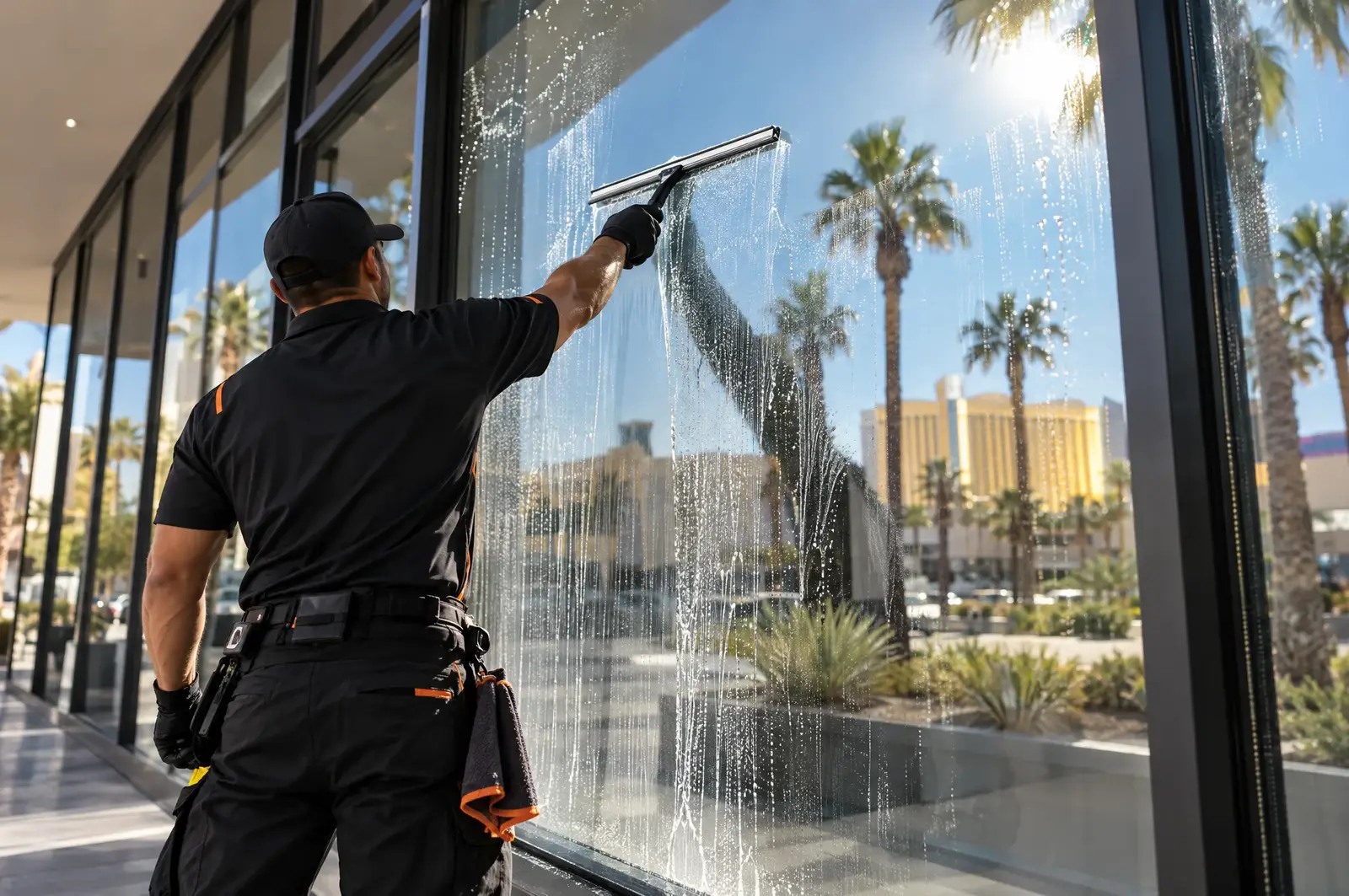
Final Phase cleans interior glass and ground-level glass: entry doors, storefronts and sliders you can reach from the ground, and interior partitions, mirrors and sidelights. Exterior and upper-floor glass is handled by the client's exterior glass vendor.
What gets onto new glass, and what removes it
Each contaminant needs its own method. Using the wrong one is how glass gets scratched, and a scratch cannot be cleaned out.
Labels and window sticker removal
Manufacturer labels and stickers are lifted at the edge, peeled slowly, and the adhesive is dissolved with a glass-safe solution rather than scraped dry.
Tape and protective film
Painter's tape, masking and film are peeled while the glass is still cool and dry, then adhesive lines are softened and wiped.
Paint overspray and splatter
Paint removal from windows is done with a fresh razor blade held flat, on a wet surface, or a solvent tested on a small area first.
Caulk, mud and plaster
Cured material is softened and lifted with a plastic blade or razor, then the glass is cleaned to remove the residue ring.
Tell us the square footage, the phase and your deadline. We send a clear written bid, usually after a quick walkthrough.
How post construction window cleaning avoids scratches
Post construction window cleaning is a sequence. The order protects the glass and the frame.
Inspect and test
The crew checks the glass type, any coatings and the frame finish, and tests removal methods on a small corner before working a full pane.
Dry-clean the surroundings
Sills, tracks and frames are vacuumed first so loose grit cannot be dragged across the glass.
Wet, then lift
The glass is lubricated with a wetting solution and razor or plastic blades remove paint, mud and caulk at a flat angle. Blades are changed often, because a nicked edge scratches.
Dissolve what remains
Adhesive and residue are dissolved with a glass-safe product and wiped. Solvents stay off frame finishes, gaskets and seals.
Finish and inspect
Both sides are squeegeed and detailed at the edges, then checked at an angle against the light for streaks and ghost lines.
Tracks, frames and sills
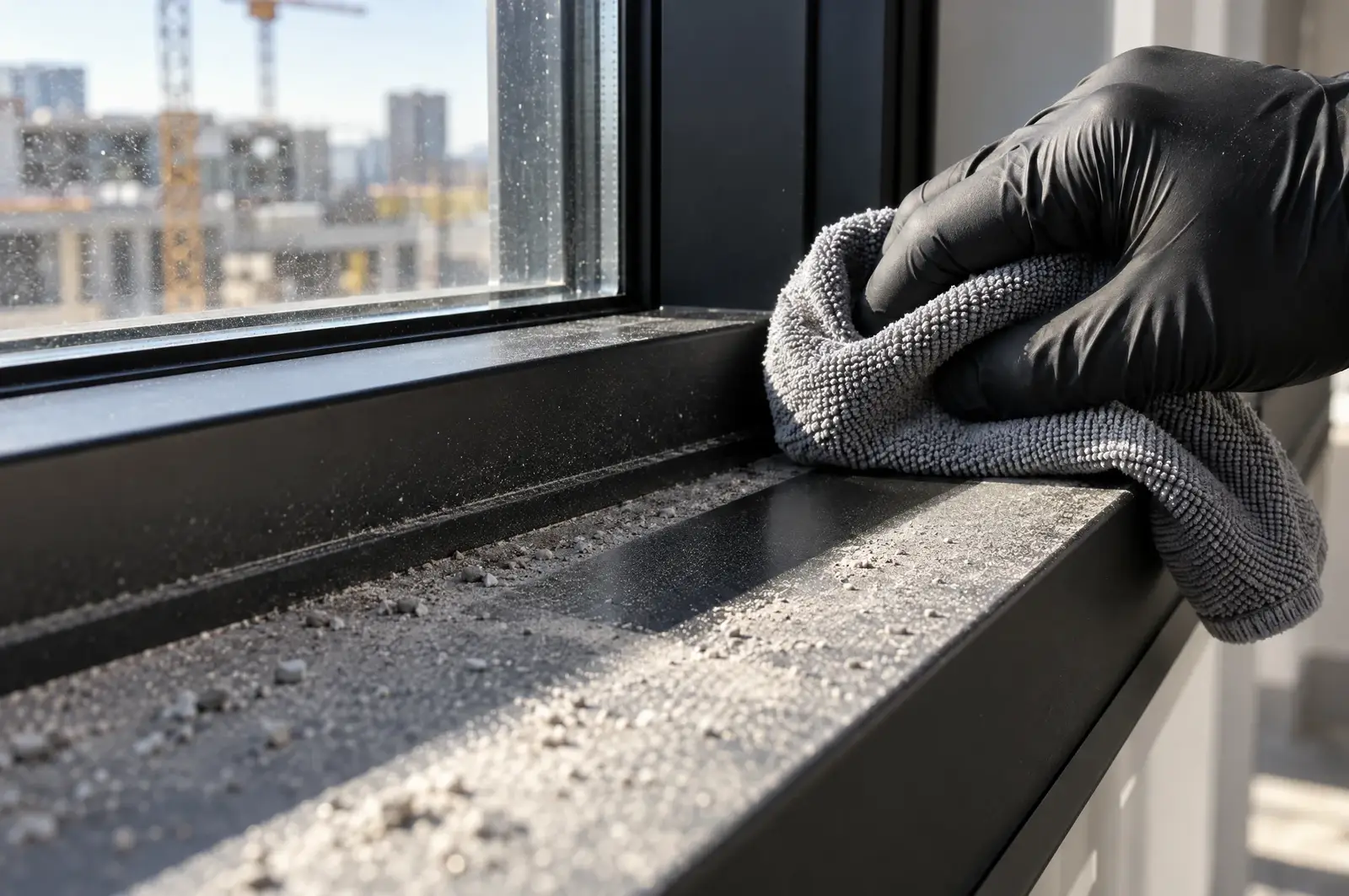
Glass is only half of a window. Tracks collect sanding dust and grit that scratches glass when a slider moves. Frames hold overspray and tape lines. Sills collect everything that falls from the wall above.
We clean the whole opening in one pass so nothing has to be redone. Detail brushes and HEPA vacuums clear tracks first, followed by damp cloths for the frame and sill. Frame finishes, such as anodized aluminum, vinyl or painted wood, set the method and the products we use.
- Slider and storefront tracks vacuumed and wiped
- Frame corners and gasket edges detailed
- Sills cleared of caulk, plaster and mud
- Weep holes and drain slots cleared of grit where accessible
Glass cleaning scope by location
The same methods apply across property types. These are the places we work.
Entry and storefront
- Entry doors and sidelights cleaned both sides
- Ground-level storefront panes, interior face and reachable exterior face
- Door hardware and push plates wiped
- Decals and construction notices removed
Interior glass
- Conference room walls and glass partitions
- Office fronts, sidelights and transoms within reach
- Mirrors, display case glass and shower enclosures
- Interior windows between rooms or corridors
Homes
- Windows and sliding doors reachable from the floor
- Tracks, sills and screen frames wiped
- Garage and entry door glass
- Shower doors and bathroom mirrors
When to book the glass, and how it fits the other phases
Glass is usually done in the final phase, after the last painter and glazier have left, so the work is not undone by the next trade. Labels and film are left on during the rough phase on purpose to protect the glass, as noted under rough construction cleaning. The results are reviewed in the final construction cleaning walkthrough.
For occupied buildings, ongoing glass care is available through interior window and glass cleaning. Builders and superintendents can see how glass fits into the closing checklist on the home builders page, and you can request a bid with the number of panes or a floor plan.
Service areas
Construction Window Cleaning across the Las Vegas valley. Pick your city for local details.





Construction Window Cleaning questions
What is construction window cleaning?
Construction window cleaning is the removal of labels, tape, film, paint, caulk and dust from new glass after a build. It is done with razor blades, plastic scrapers and glass-safe solutions chosen to avoid scratching the glass.
How do you do window sticker removal without scratching?
Window sticker removal starts with peeling the label slowly, then dissolving the adhesive with a glass-safe solution instead of scraping dry. Any blade used is fresh, held flat and kept on a wet surface.
Can paint removal from windows damage the glass or frame?
Paint removal from windows is safe on glass when it is done with a fresh blade on a wet surface and tested first. Frames and seals get non-abrasive methods, and solvents are kept off finishes that they could mark.
Do you clean the outside of upper-floor windows?
No. We clean interior glass and ground-level glass. Exterior upper-floor and high-reach glass is handled by the client's exterior glass vendor.
Should windows be cleaned before or after the other final clean tasks?
Glass is cleaned within the final phase, after the dry dusting is complete and before the floors. That way, nothing from the glass work falls onto a clean floor.
Do you remove tint film or security film?
We remove construction film, tape and labels. Installed tint and security film are part of the window and are left to the installer or the client's glass vendor.
How long should labels and film stay on new windows?
Leave labels and protective film on until the final phase. They protect the glass from paint, drywall dust and tools, and they come off cleanly if they have not baked in the sun for months.